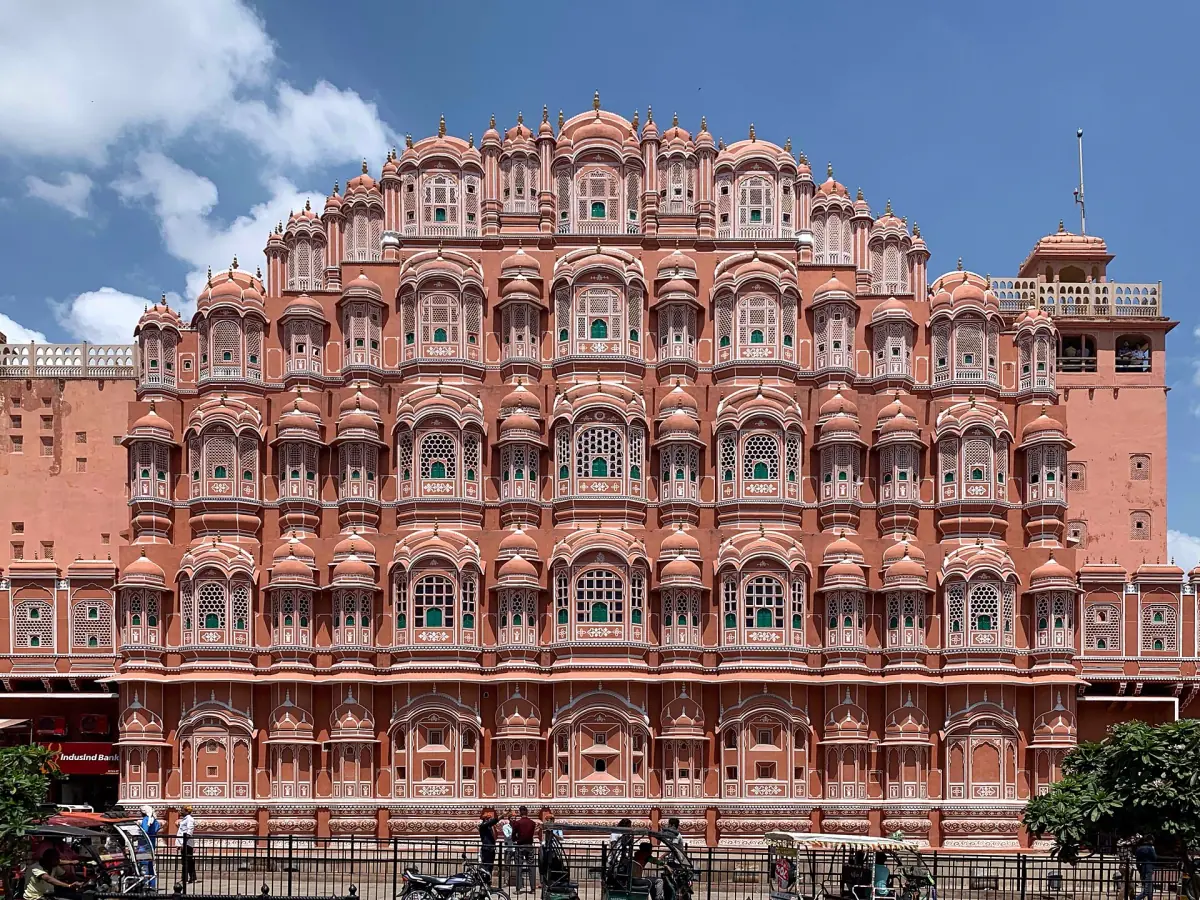
Hawa Mahal facts at a glance
The Hawa Mahal stands in Jaipur, Rajasthan. Its name is usually translated as Palace of Winds. It was built in 1799 for Maharaja Sawai Pratap Singh, and the architect was Lal Chand Ustad. The building has five storeys.
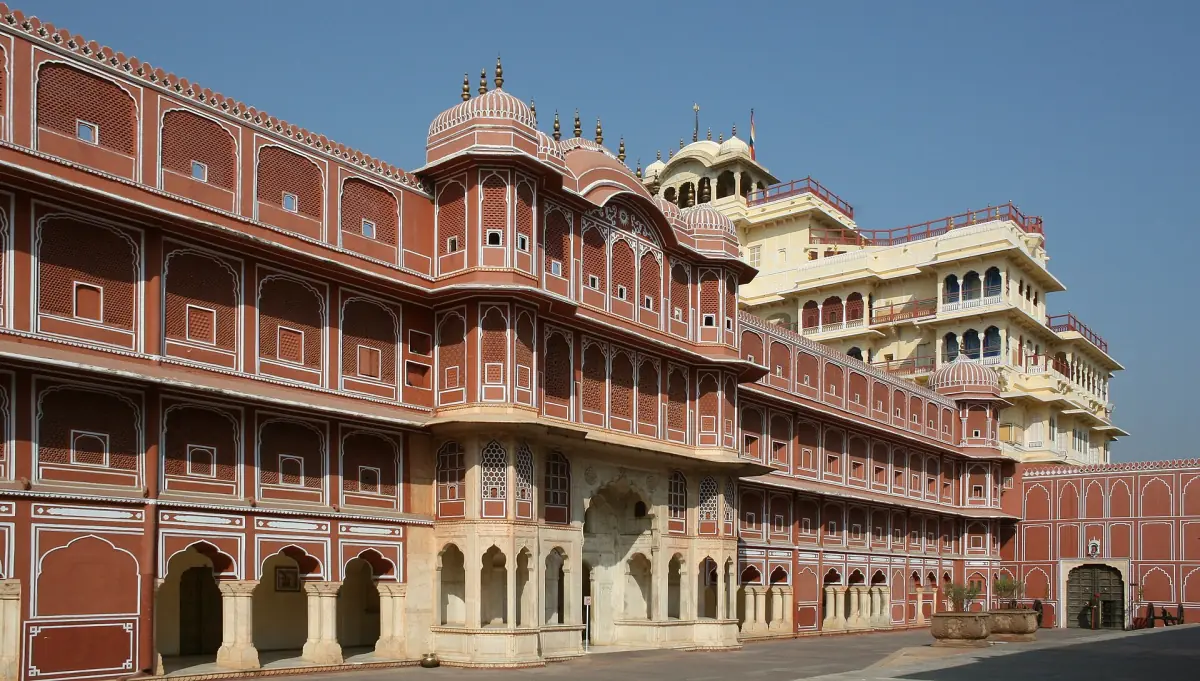
The famous pink front is not a separate medieval fort. It belongs to the historic palace area of the old city, and it was made for watching the street, not for defence. This site is an independent guide and is not run by the monument, its caretakers or any tourism body.
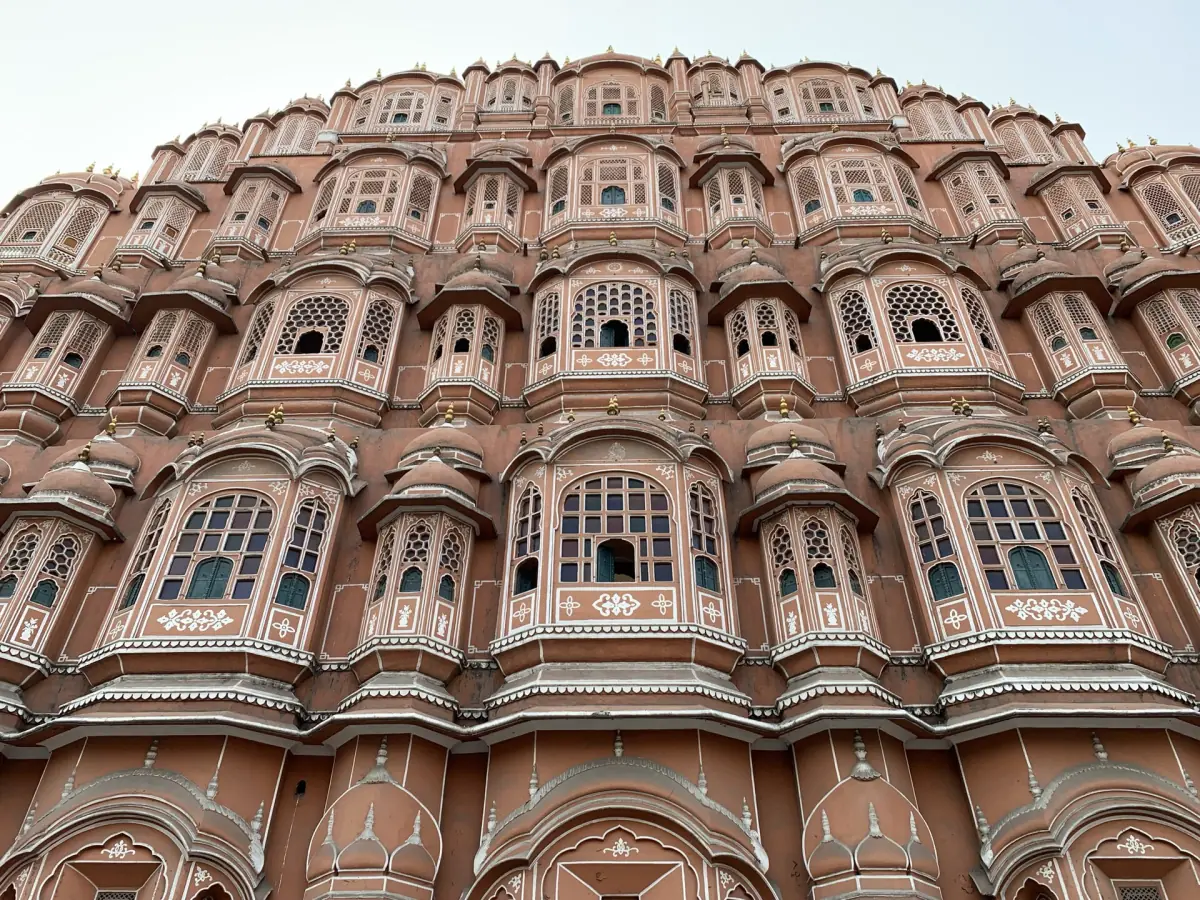
Key numbers and details
What is firm, and what to treat as approximate.
| Topic | What we can say | How to read it |
|---|---|---|
| Windows | 953 jharokhas | This is the usual count, and you cannot check it on a visit. |
| Storeys | 5 | Visible from the street as a stepped, honeycomb-like front. |
| Built | 1799 | Patron Sawai Pratap Singh, architect Lal Chand Ustad. |
| Height | About 15 m to about 26.5 m (87 ft) | Published heights vary by a wide margin. Treat any single number as approximate. |
| Style | Rajput and Islamic forms | Lattice windows and small balconies across the whole front. |
| Adult entry 2026 | INR 100 (Indian), INR 600 (foreign) | Rates as of 1 January 2026. Students pay INR 50 and INR 300. |
| Daytime hours | 9:00 to 16:30 or 17:00 | See the timings page and check the day before you go. |
Jaipur tours that include the Pink City
Walking tours, city tours and day trips, with live prices and availability. Check whether a tour includes entry inside the Hawa Mahal or only a view from the street.
Design and how it works
A wall of windows rather than a palace with rooms.
The windows
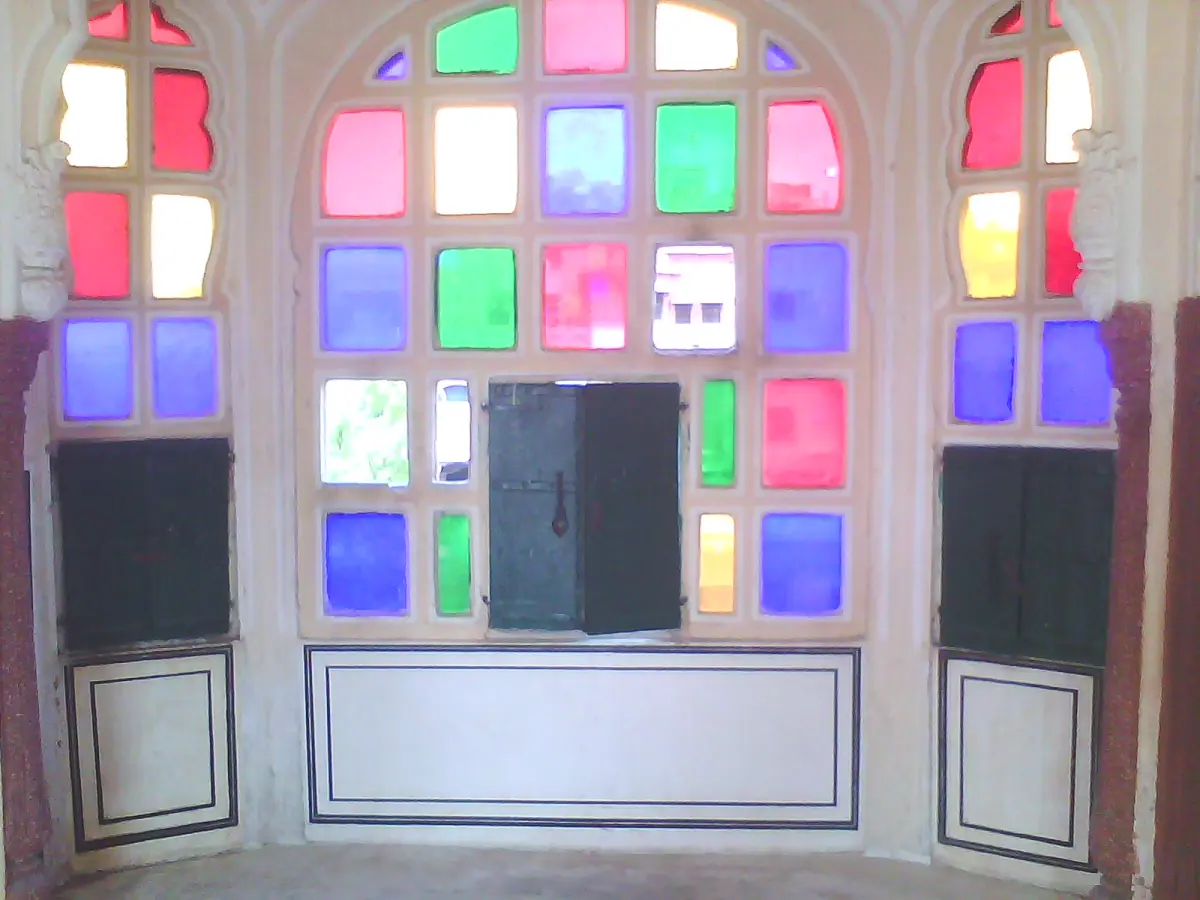
The front is made of jharokhas, small projecting balconies with lattice screens. The latticework let people inside see out while keeping them hidden from the street. The colored glass you see in some windows is a separate detail inside the building.
Air movement
The many small openings let a draught pass through the building. That is the idea behind the name. How cool it feels depends on the day, the season and the wind, so do not count on a fixed temperature.
The crown reading
One common reading says the stepped top resembles the crown of Krishna. Treat it as an interpretation of the shape, not a documented intention of the builders.
Front and back
The street front is the side everyone photographs. The visitor entrance is behind the building, on the opposite side. Some older guides call the street side the back, so describe it as the street facade and you will not get lost.
Visiting facts
The points that affect your plan.
Outside view or climb
You can look at the facade from the street without entering. Going inside and climbing is a separate visit with a ticket. Some city tours only stop for the outside view, so ask what is included. Details are on the tickets page.
Access
Ramps to the upper levels are mentioned, but above the ground floor you may find only narrow stairs. Do not assume the whole building is step-free. If mobility is an issue, ask at the entrance what is open on the day.
Museum in the courtyard
A small museum sits in the courtyard. The monument is looked after by the Archaeology Department of Rajasthan.
Light and night
The front is best seen in daylight from across the street. Do not count on a night opening of the interior. If you want an evening look, plan it as a view from the street and check the current timetable. See timings.
Getting there
The Hawa Mahal is in the old Pink City. The metro runs to Chhoti Chaupar and Badi Chaupar in the old-city area. See the Pink City guide for the layout, gates and bazaars around it.
The forts outside the city, including Amber, have their own guide at Amber Fort.
Keep reading
More on the building and its neighbors.
Hawa Mahal facts: frequently asked questions
How many windows does the Hawa Mahal have?
The usual count is 953 small windows, called jharokhas. You cannot check the number on a visit.
How tall is the Hawa Mahal?
Heights range from about 15 m to about 26.5 m (87 ft). Use the figure as a rough guide only.
Who built the Hawa Mahal, and when?
It was built in 1799 for Maharaja Sawai Pratap Singh. The architect was Lal Chand Ustad.
How many floors does it have?
Five storeys, stacked behind the street front.
How much is entry in 2026?
As of 1 January 2026, entry is INR 100 for Indian adults and INR 600 for foreign adults. Students pay INR 50 or INR 300. Check the current price at the gate or on the tickets page.
Which Jaipur sites are on the World Heritage list?
Jantar Mantar was inscribed in 2010. The historic walled city of Jaipur was inscribed separately in 2019. Do not mix up the two dates.