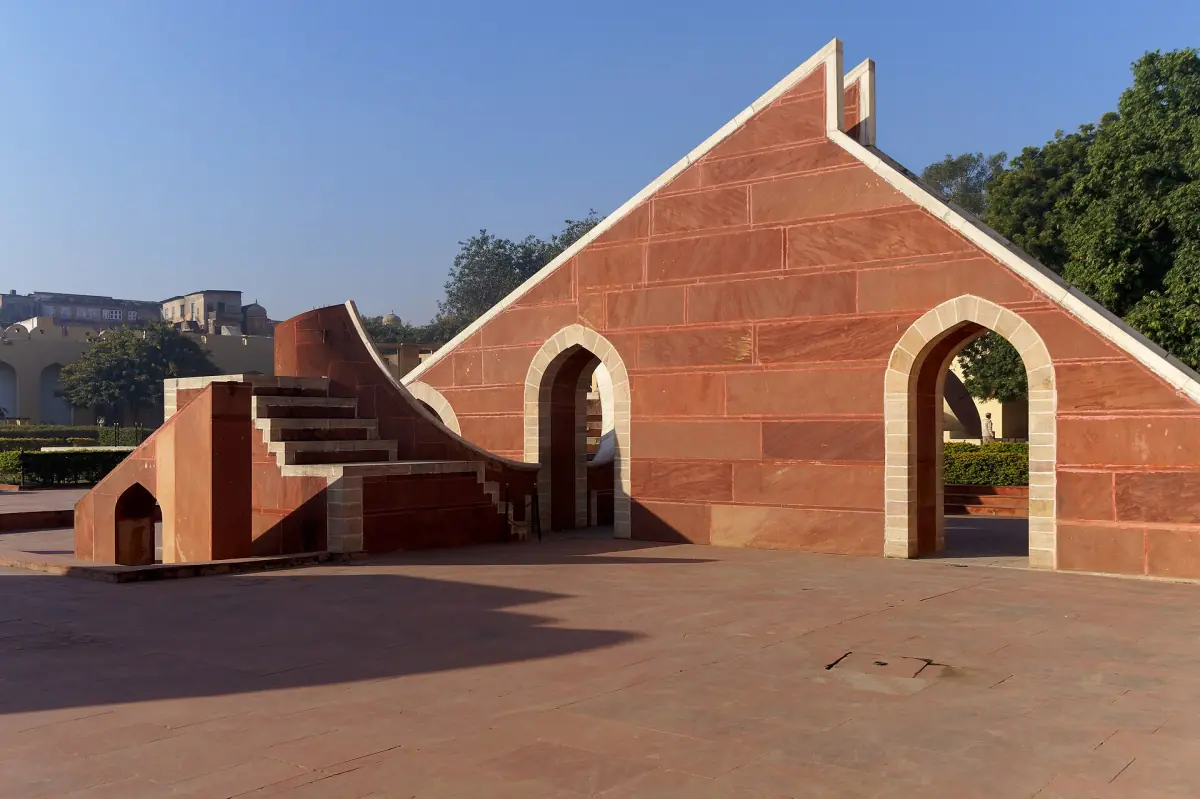
What Jantar Mantar is
Jantar Mantar is an astronomical observatory in Jaipur. It dates to the early 18th century and was built by Maharaja Sawai Jai Singh II. The instruments are large fixed structures, made for observing the sky with the naked eye.
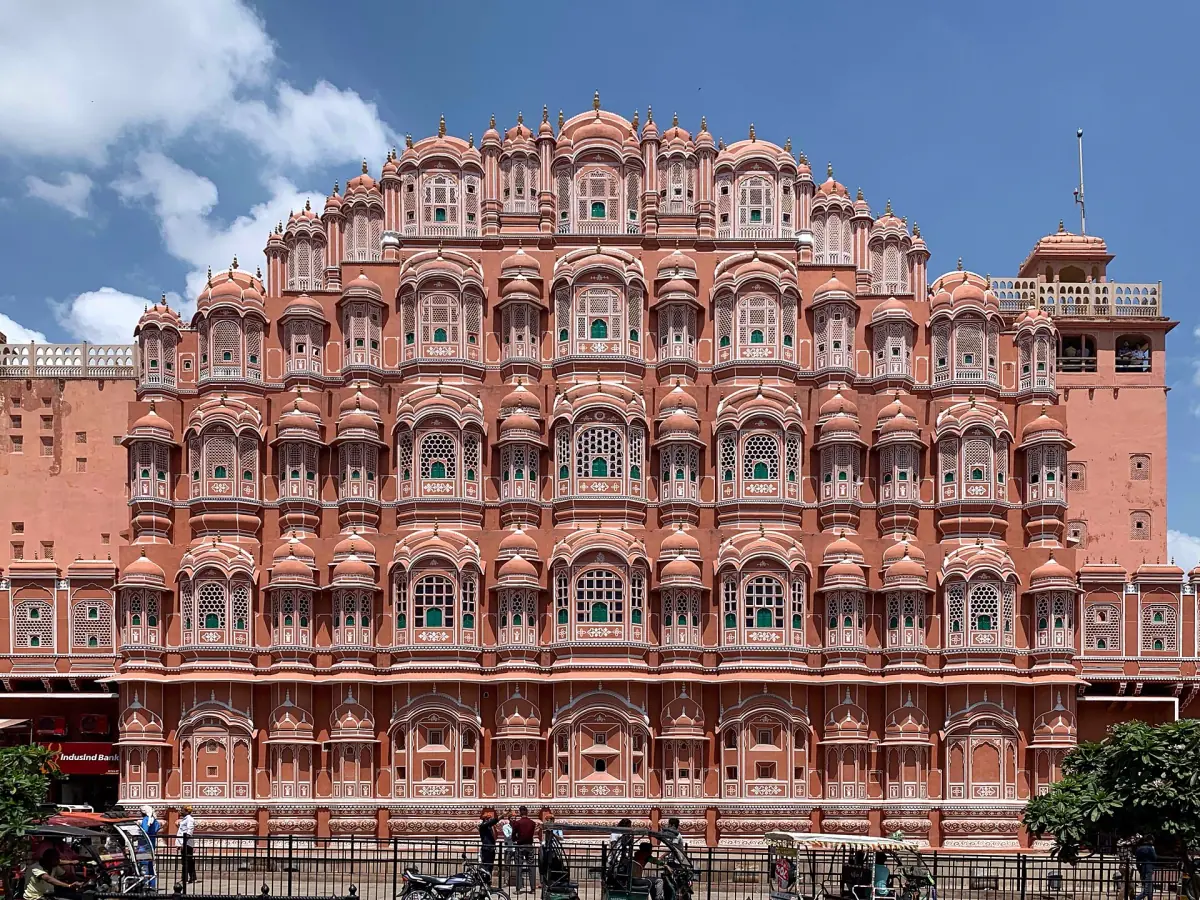
The site was inscribed on the World Heritage list in 2010. Jaipur's historic walled city was inscribed separately in 2019, so the two dates belong to different places. Jai Singh II also founded Jaipur, but he did not build the Hawa Mahal, which came in 1799 under Sawai Pratap Singh.
This site is an independent guide and has no connection with the observatory or the bodies that run it.
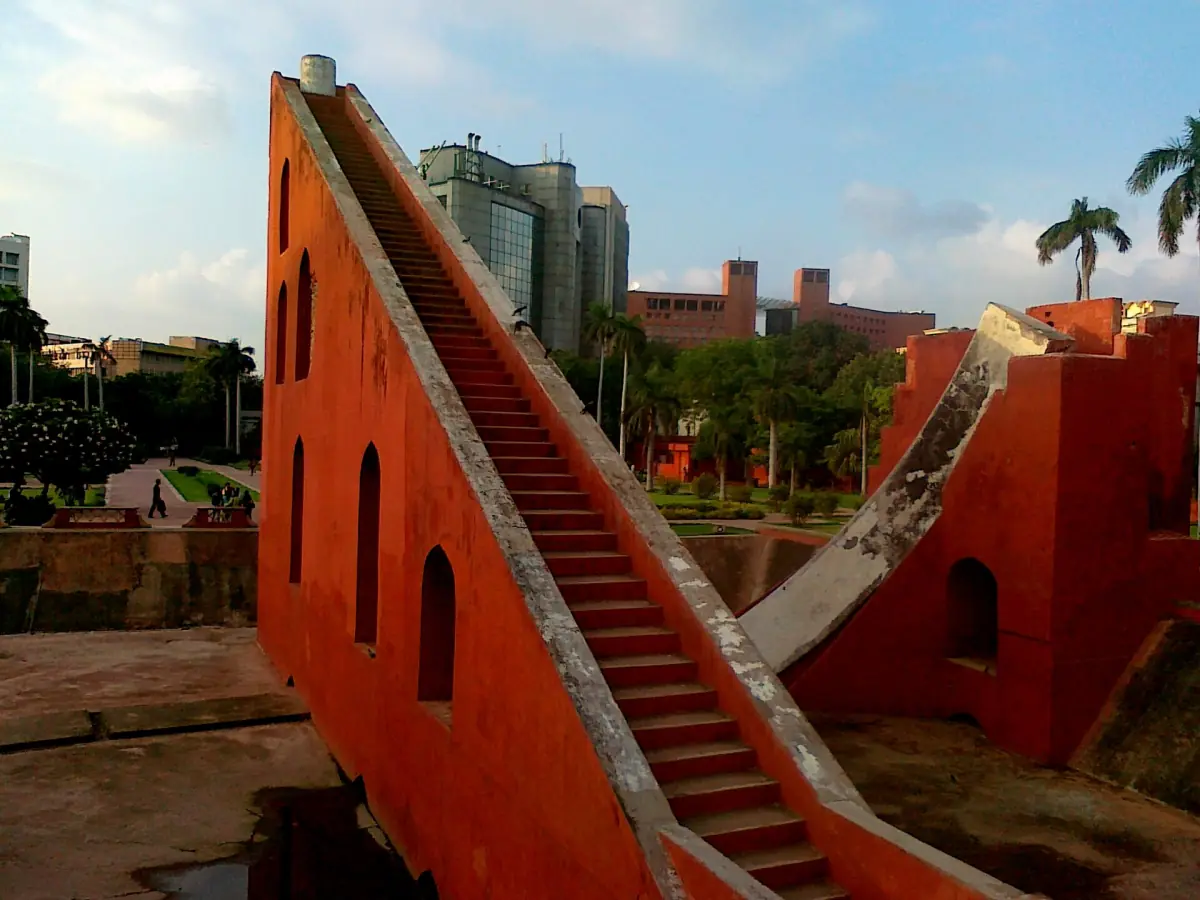
Entry and hours 2026
Rates for the state monuments as of 1 January 2026, the same as at the Hawa Mahal.
| Visitor | Adult | Student |
|---|---|---|
| Indian visitors | INR 100 | INR 50 |
| Foreign visitors | INR 600 | INR 300 |
Opening hours are 9:00 to 17:00. Ask at the gate about the last entry, evening visits, camera fees and a children's rate. Confirm the price on the day, because the tariff is new.
Jaipur tours that include Jantar Mantar
City tours and guided visits with live prices and availability. A guide helps here, so check whether one is included.
How the instruments work
Why a guide is worth having.
Samrat Yantra
The large Samrat Yantra is an equatorial sundial. It has a dimension of 27 m and a time accuracy of 2 seconds. Treat the accuracy as a nominal figure, not something you can read off on a cloudy day.
How many instruments
UNESCO describes about 20 large fixed instruments. The Rajasthan tourism board counts 16. The count depends on what is included, so do not expect one fixed number.
Naked-eye astronomy
The instruments are designed for observing the sky without a telescope. A guide can show how each one reads the sun or the stars.
Two people, two dates
The observatory was built under Jai Singh II in the early 18th century. The Hawa Mahal came decades later under Pratap Singh. Keep the two names apart when you read signs or listen to a guide.
Guided visit
A guide is recommended to explain the instruments, but not required. Ask for the fee and agree the price before you start.
Planning your visit
Time, weather and neighbors.
Time of day
The instruments work with the sun, so a visit in daylight makes the most sense. Bring water and a hat in the hot months, because it is an open-air site.
How long to allow
Most visitors need a short visit. A guide can stretch it as you go through the main instruments.
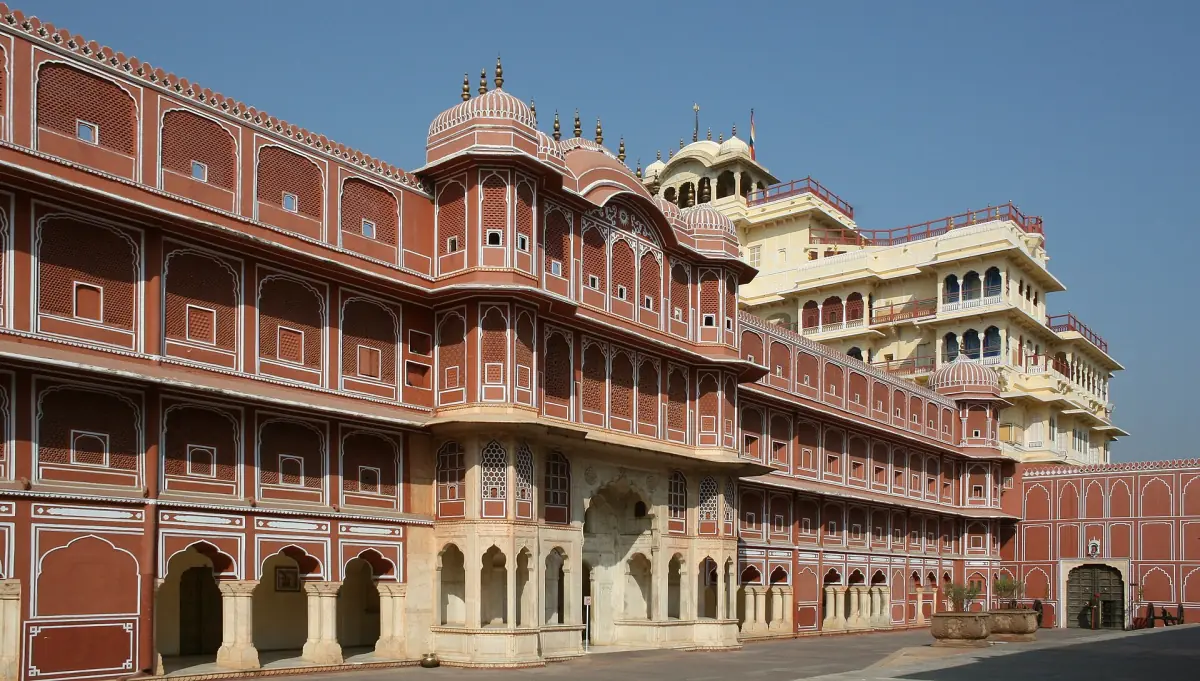
Combine with the City Palace
Both sights are in the old town. Read the City Palace page for ticket categories and closures.
Combine with the Hawa Mahal
The Palace of Winds is in the same old town. See Hawa Mahal facts and the timings page.
Outside the city, the hill forts have their own guides at Amber Fort and the Jaipur forts.
Jantar Mantar Jaipur: frequently asked questions
What is Jantar Mantar?
An open-air astronomical observatory in Jaipur, built in the early 18th century by Maharaja Sawai Jai Singh II. It has large fixed instruments for observing the sky with the naked eye.
When did Jantar Mantar become a World Heritage Site?
In 2010. The walled city of Jaipur was inscribed separately in 2019.
How much is the Jantar Mantar ticket in 2026?
As of 1 January 2026, tickets are INR 100 for Indian adults and INR 600 for foreign adults. Students pay INR 50 or INR 300.
What are the opening hours?
The site is open 9:00 to 17:00. Ask at the gate about the last entry time.
How many instruments are there?
UNESCO describes about 20 large instruments, and the Rajasthan tourism board counts 16. Counting methods differ.
Do I need a guide?
No, but a guide helps to explain the instruments.