
Why the Palace of Winds was built
The Hawa Mahal dates to 1799. Its patron was Maharaja Sawai Pratap Singh, and the architect was Lal Chand Ustad. It stands in the historic palace area of Jaipur's old town.
The purpose was practical. Women of the royal household lived in purdah, which meant they did not appear in public. Behind the lattice windows of the Hawa Mahal they could watch street life and processions without being seen. Tourism descriptions also present the building as a summer retreat for the ruling family.
This site is an independent guide. It is not connected to the monument, the state archaeology department or any tourism body.
Timeline: from the founding of Jaipur to today
Dates that help you place the building.
| Year | Event | Who |
|---|---|---|
| 1727 | Jaipur is founded as a planned city on the plain, with a grid, squares at crossings called chaupars and matching street fronts | Sawai Jai Singh II |
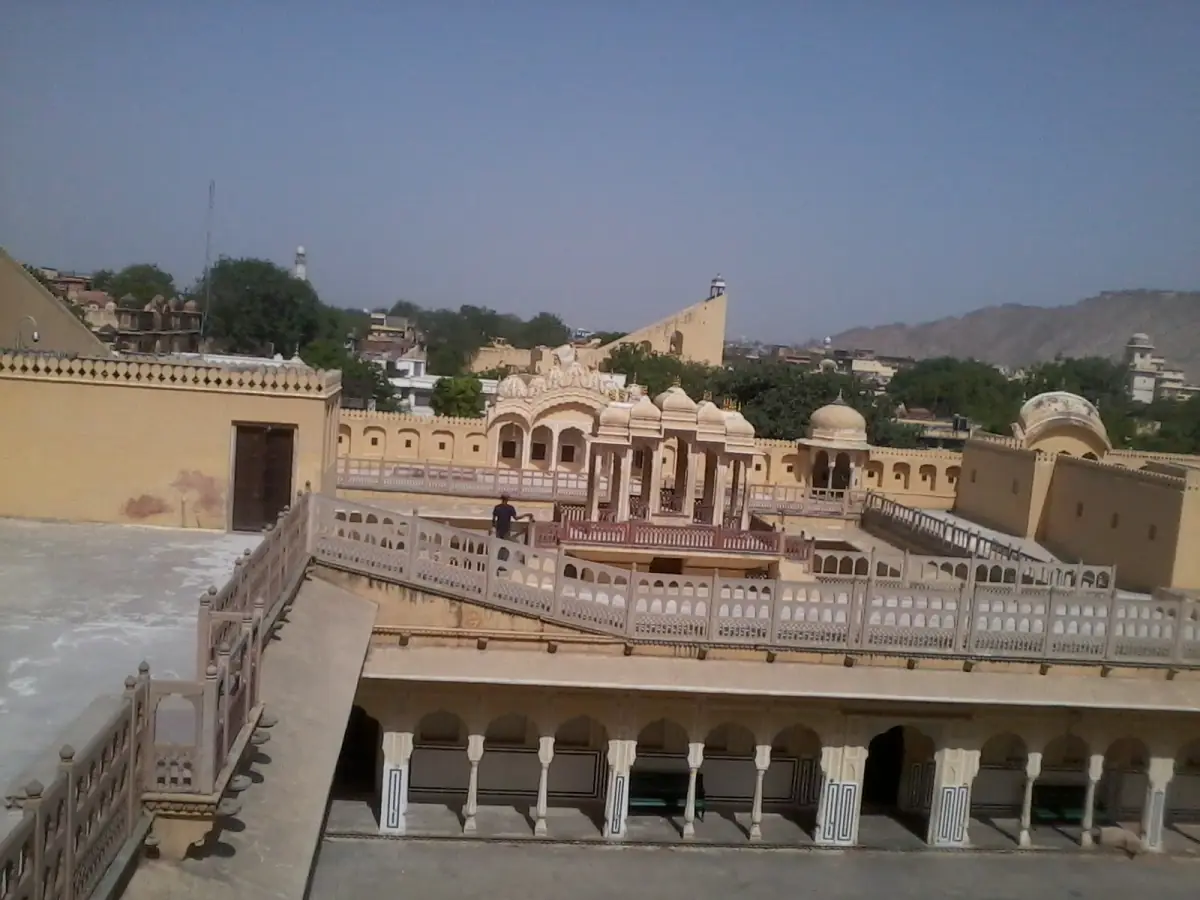
| Early 1700s | The Jantar Mantar observatory is built | Sawai Jai Singh II |
| 1799 | The Hawa Mahal is built | Sawai Pratap Singh, architect Lal Chand Ustad |
| 1876 | The city is painted pink for the visit of the Prince of Wales | Maharaja Ram Singh |
| 2010 | Jantar Mantar is inscribed on the World Heritage list | UNESCO |
| 2019 | Jaipur's historic walled city is inscribed on the World Heritage list | UNESCO |
Two different rulers appear here. Jai Singh II founded the city and built the observatory. Pratap Singh built the Hawa Mahal about seventy years after the city was founded, in 1799. Do not credit the Hawa Mahal to the founder.
Jaipur tours with history guides
City tours and walks through the old town, with live prices and availability. Check whether the Hawa Mahal is an outside stop or includes entry.
The Hawa Mahal in its setting
How the building belongs to the city around it.
A planned city
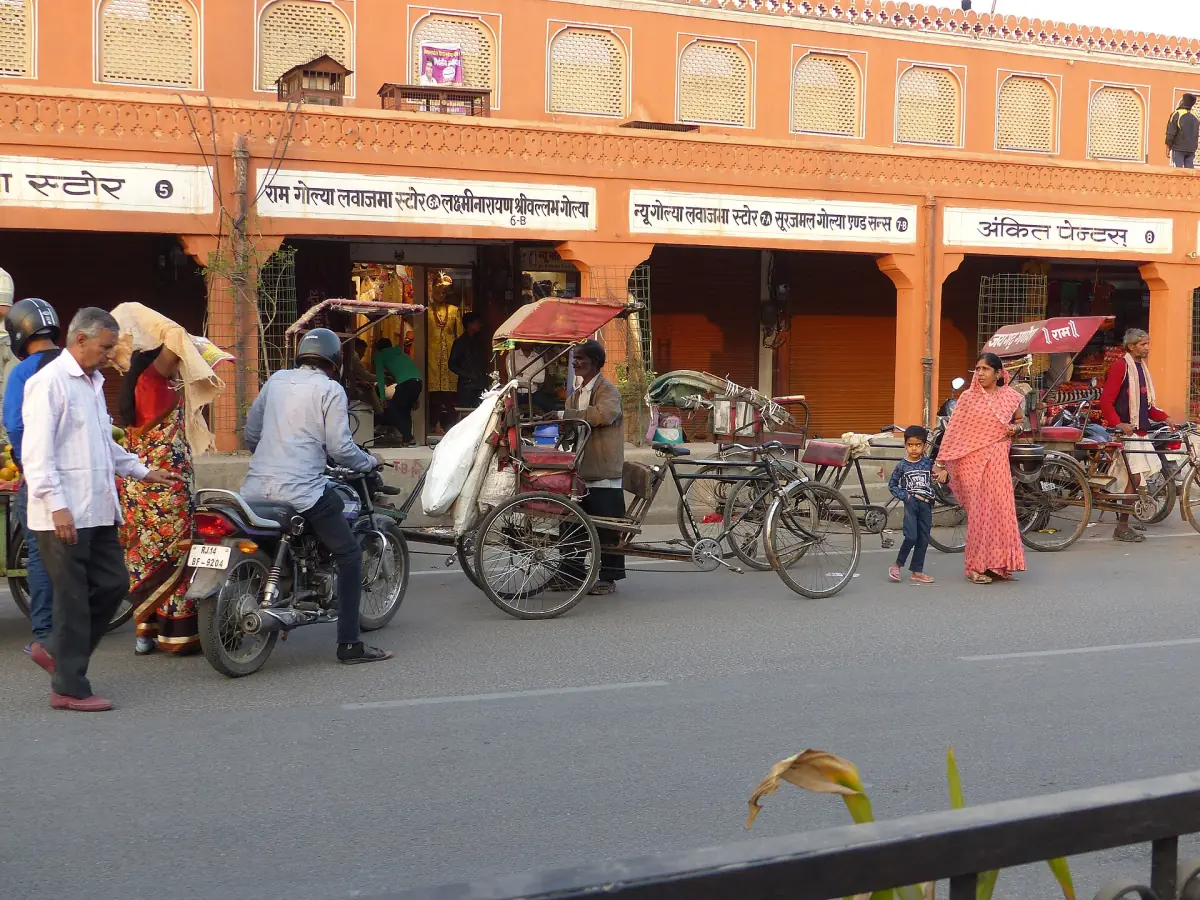
Jaipur was laid out in 1727 rather than growing by chance. The grid, the crossings and the uniform street fronts are the features that shape the old town. The Hawa Mahal sits inside that frame and belongs to the historic palace area, not to a separate medieval fort. See the Pink City guide.
Why the city is pink
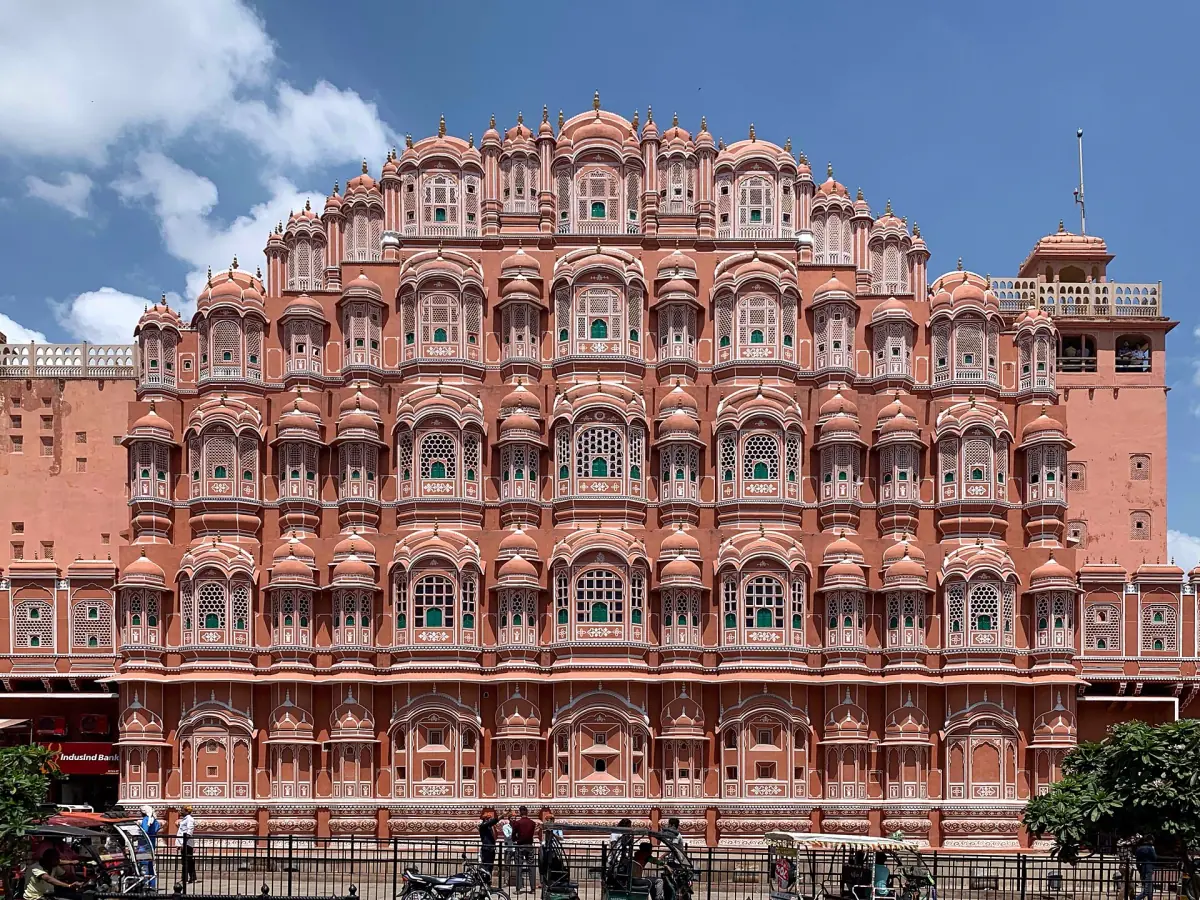
The color goes back to 1876, when the city was painted for the visit of the Prince of Wales. Pink stood for hospitality. The Hawa Mahal's pink front is part of that look, and it is why the old town got its name.
The architecture
Descriptions mention Rajput and Islamic forms. The upper front is built of jharokhas, small projecting balconies with lattice screens. Some readers see the stepped top as the crown of Krishna, which is an interpretation of the shape. For the numbers, see the facts page.
A building made for looking out
Most palaces were built to be seen. The Hawa Mahal was built so that people inside could see without being seen. That is why the front is almost all windows.
Today
Who looks after it and what to expect.
Care of the monument
The Hawa Mahal is looked after by the Archaeology Department of Rajasthan. A museum is set up in the courtyard. This site has no role in running it.
Visiting
You can see the front from the street or go in and climb. Entry as of 2026 is INR 100 for Indian adults and INR 600 for foreign adults. See tickets and timings before you go.
Next stops
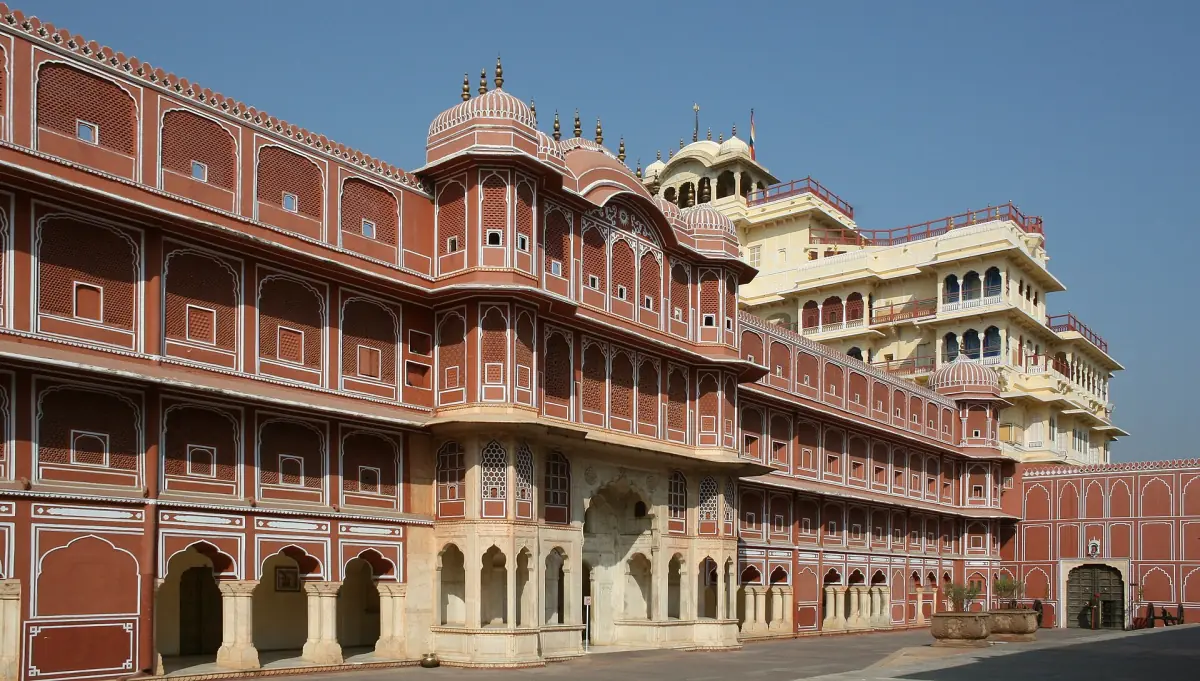
The royal residence next door is covered on the City Palace page. The observatory built by the city's founder is on the Jantar Mantar page.
Continue your visit
Pages that add context to the history.
Hawa Mahal history: frequently asked questions
When was the Hawa Mahal built?
In 1799, for Maharaja Sawai Pratap Singh. The architect was Lal Chand Ustad.
Why was the Hawa Mahal built?
So that women of the royal household could watch street life and processions from behind lattice windows without being seen. It is also described as a summer retreat.
Who founded Jaipur?
Sawai Jai Singh II founded Jaipur in 1727. He also built the Jantar Mantar. He is not the builder of the Hawa Mahal.
Why is Jaipur called the Pink City?
The city was painted pink in 1876 under Maharaja Ram Singh for the visit of the Prince of Wales. Pink stood for hospitality.
Is the Hawa Mahal a fort?
No. It is a screen-like building in the historic palace area of the old town. The forts of Jaipur, such as Amber, are covered at Amber Fort history.